The best beaches in Rhodes to reach by car
Rhodes has beaches right the way round its coast, but the best of them are spread out and only a few are easy to reach by bus. With a hire car you can follow the weather instead: drive to whichever side of the island is calm that day, stay for the late-afternoon light and head home once the car parks have emptied.
Here is our pick, from the coves just outside Rhodes Town to the southern tip, with a note on wind, parking and what each beach is really like, so you can match the day to the people in the car.

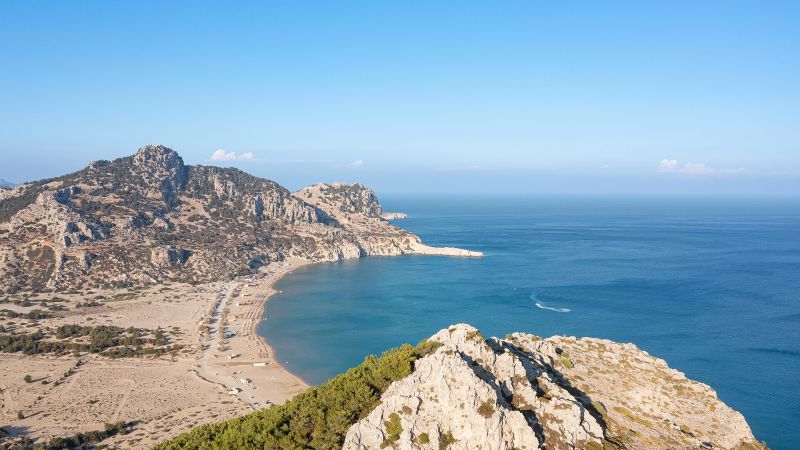
East or west? Let the wind decide
In summer the prevailing wind on Rhodes is the meltemi, a dry wind that sweeps down the Aegean and reaches the island mainly from the west and north-west. It is usually at its strongest in July and August, builds through the day and tends to drop in the evening.
That makes the west coast, from Ixia past the airport towards Kamiros, the windier side, with bigger waves and mostly pebbly beaches. The east coast, from Kallithea down past Lindos, lies in the shelter of the island and has the long sandy bays and calmer water. On a breezy day, go east to swim and west to watch the windsurfers.
- Calm, shallow water for children: Tsambika, Agathi and St Paul’s Bay.
- Clear water for snorkelling: Anthony Quinn Bay and the coves at Kallithea Springs.
- Wind and waves for boards: Ixia and Ialyssos, and the Aegean side of Prasonisi.
Near Rhodes Town: Kallithea Springs and Anthony Quinn Bay
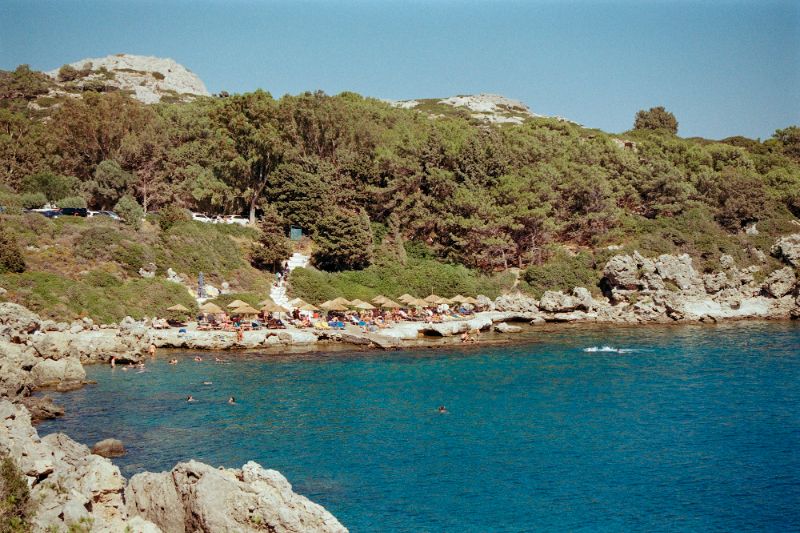
Kallithea Springs lies only about 10 km south of Rhodes Town. The domed spa was built by the Italians and opened in 1929 to make use of springs known since ancient times; it later fell into ruin, and was restored and reopened in 2007. In front of it there is a sheltered pebbly cove with very clear water, and more small beaches lie a little further south.
Anthony Quinn Bay, about 4 km south of Faliraki, is a narrow inlet where pine trees grow almost down to the water and the sea turns a deep emerald green. It is named after the actor, who was on Rhodes to film The Guns of Navarone. There is hardly any sand, so water shoes help, but it is one of the best snorkelling spots on the island. In July and August it gets busy, so come early; the small sandy beach at Ladiko next door is a gentler option.
Tsambika and Agathi: sand and shallow water
Tsambika, just south of Kolymbia, is a broad sweep of fine sand with water that stays shallow a long way out, which is why families love it. Sunbeds, tavernas and water sports take up part of the bay, but there is room to spread out. A side road winds down from the main Rhodes–Lindos road to parking behind the beach.
The small white monastery of Panagia Tsambika sits on the rocky hill above, around 240 metres up. A steep road climbs part of the way and roughly 300 steps lead to the top: hard work at midday, but well worth it in the morning or late afternoon for the view along the coast.
Agathi, also called Agia Agathi, is the next bay north of the fishing village of Haraki, about 40 km from Rhodes Town. Its golden sand and clear, shallow water are well sheltered from the wind, and it is quieter than the big resorts. The ruins of Feraklos Castle stand on the hill between the two bays, and the seafront tavernas in Haraki are handy for lunch.
At Lindos: St Paul’s Bay and the village beaches
St Paul’s Bay sits right below the Acropolis of Lindos: a small, almost round lagoon so nearly closed off by rocks that the water stays flat even when it is breezy elsewhere. According to tradition, the apostle Paul landed here, and the little white chapel on its shore is much in demand for weddings. The beach itself is small, so it pays to arrive early.
On the north side of the rock, the main beach and the smaller Pallas beach share the bay below the village and are a short walk downhill. If you are combining a swim with the Acropolis, our Lindos day trip guide covers parking and the best time to climb.
The far south: Prasonisi
At the southern tip of Rhodes, about 90 km from Rhodes Town, a strip of sand joins the island to the islet of Prasonisi for most of the summer. The Aegean on the western side usually brings wind and waves, while the Mediterranean on the eastern side is much flatter, so windsurfers and kitesurfers pick their side and swimmers stay on the calm one.
The drive from Rhodes Town takes between an hour and a half and two hours each way, so make a day of it. Our guide to driving to Prasonisi covers the route, the villages on the way and why the car should stay on firm ground rather than on the sand.
The west coast: wind, pebbles and sunsets
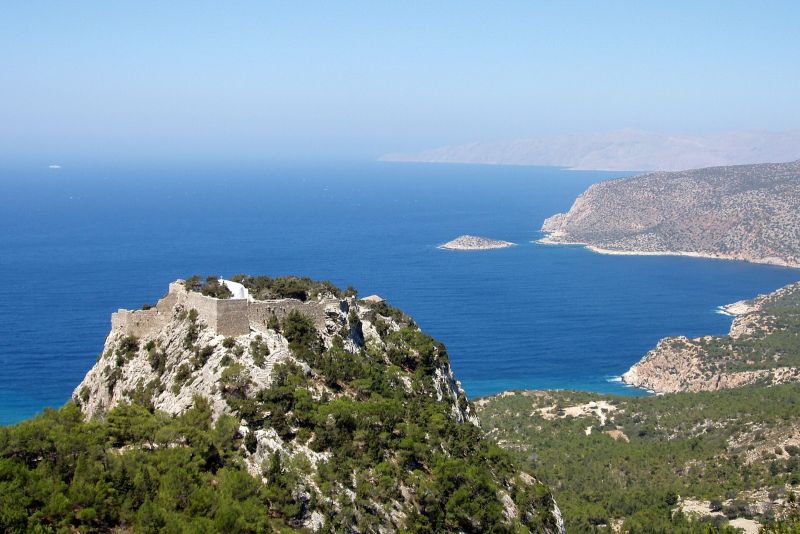
The west coast has a different character. Near the airport, the long pebbly beaches of Ixia and Ialyssos are among the main windsurfing and kitesurfing spots on Rhodes, with schools and board hire along the shore. They are handy for a swim on the day you arrive or fly home, but on windy afternoons the sea there is too rough for small children.
Further south, a steep, winding road drops from the castle of Monolithos to Fourni, a remote cove of pebbles and coarse sand. The sea there is often too rough for swimming while the meltemi is blowing, but on a still evening it is a wonderful place to watch the sun sink into the sea.
Parking and practical tips
Most beaches have a car park or roadside parking close to the sand, but at the small coves the spaces go quickly on summer days. Arrive in the morning, or come back in the late afternoon when the first wave of beachgoers heads home.
- Park only where it is clearly allowed, and never across gates, field entrances or bends. Under our rental terms, parking and traffic fines are paid by the renter.
- Keep off sand and dirt tracks. Our CDW cover does not include damage to the tyres or the underside of the car, and soft sand is exactly where cars get stuck.
- Take your valuables to the beach with you: if something you left in the car goes missing or is stolen, the insurance will not cover it.
- Look for shade when you park. Every car has air conditioning, but one left in the midday sun is baking hot inside, so keep a bottle of water in it.
Choosing a car for beach days
A small city car is the easiest to squeeze into a busy beach car park, while a family with parasols, a cool box and child seats will be glad of an SUV or a minivan with up to 9 seats. If you would like the roof down on the coast road, take a look at the convertibles on our car list.
Delivery is free wherever you are staying on Rhodes, as well as at the airport and the port, or you can pick the car up yourself at our Pastida or Kolymbia station. When you are ready, check prices and book online; if your plans change, cancelling costs nothing until 48 hours before pick-up.